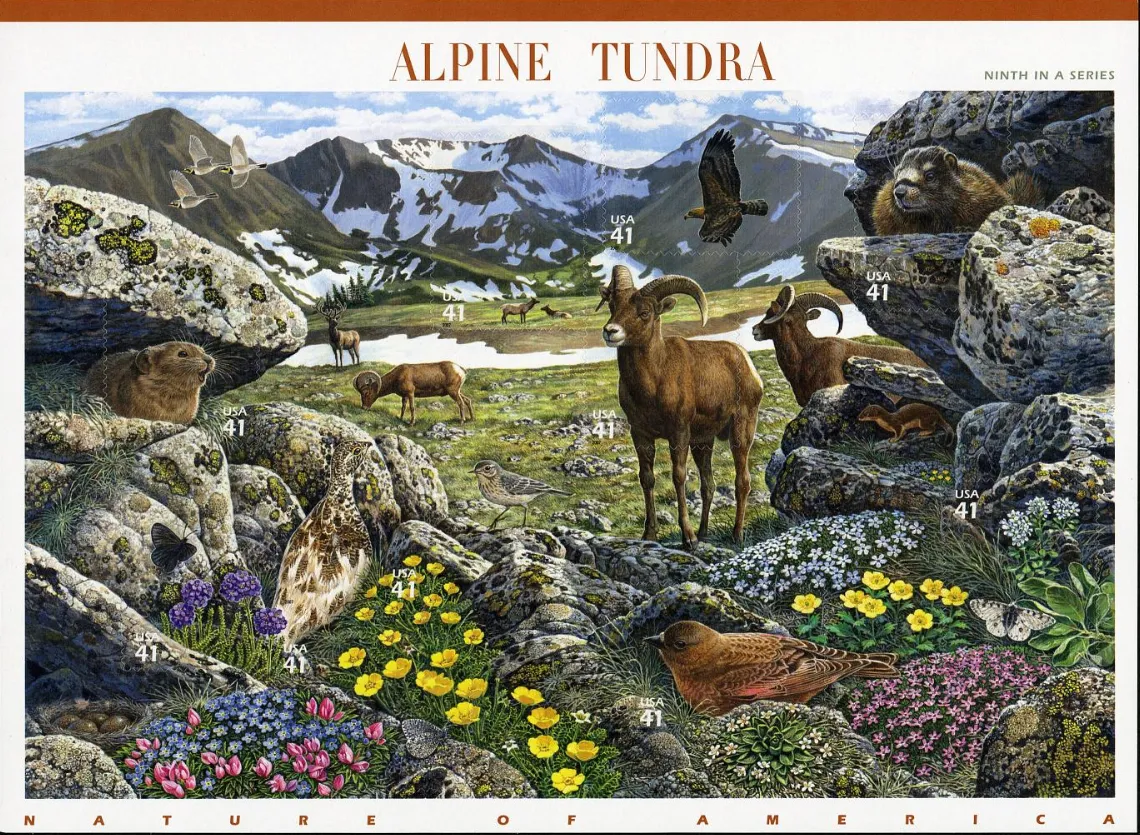
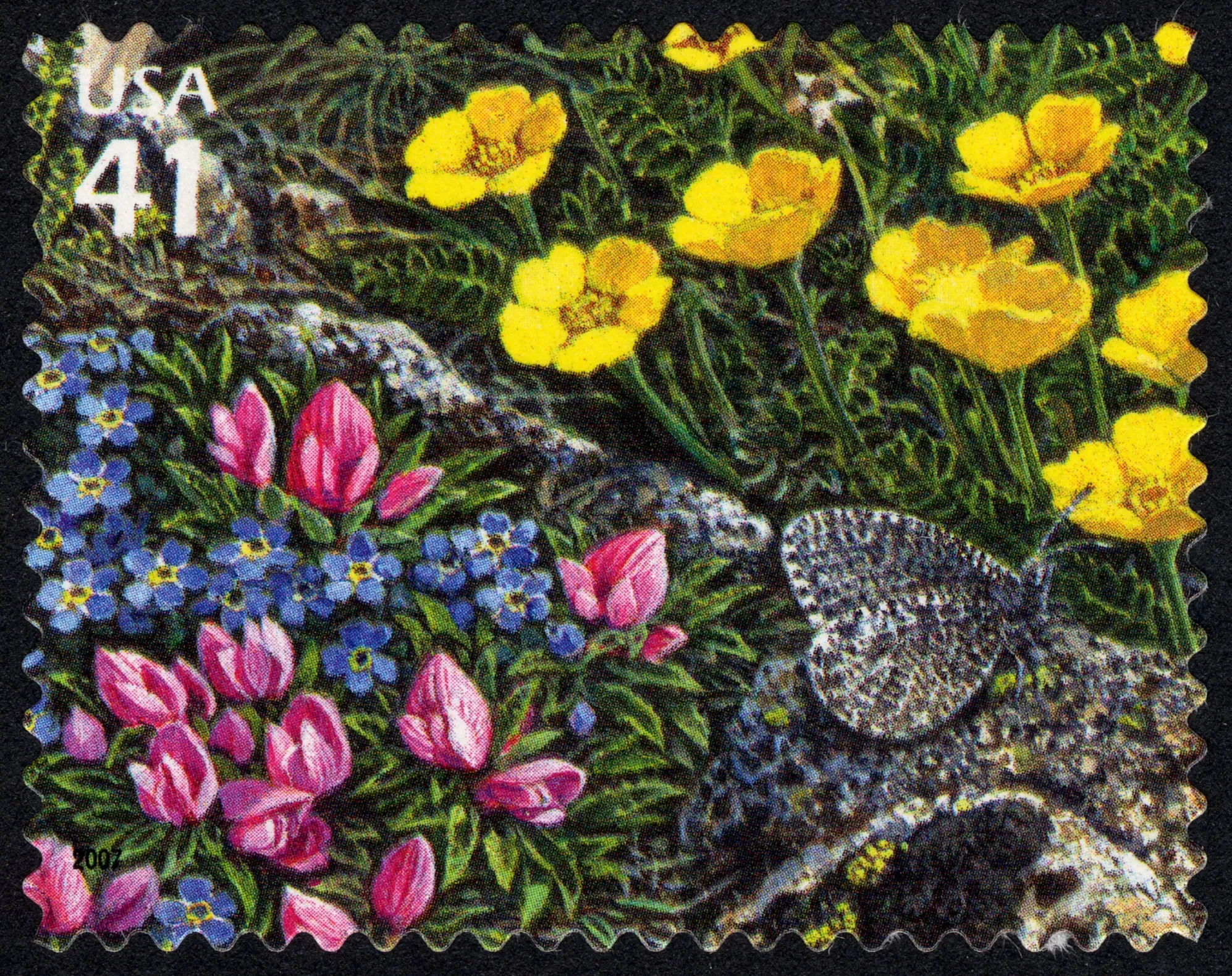
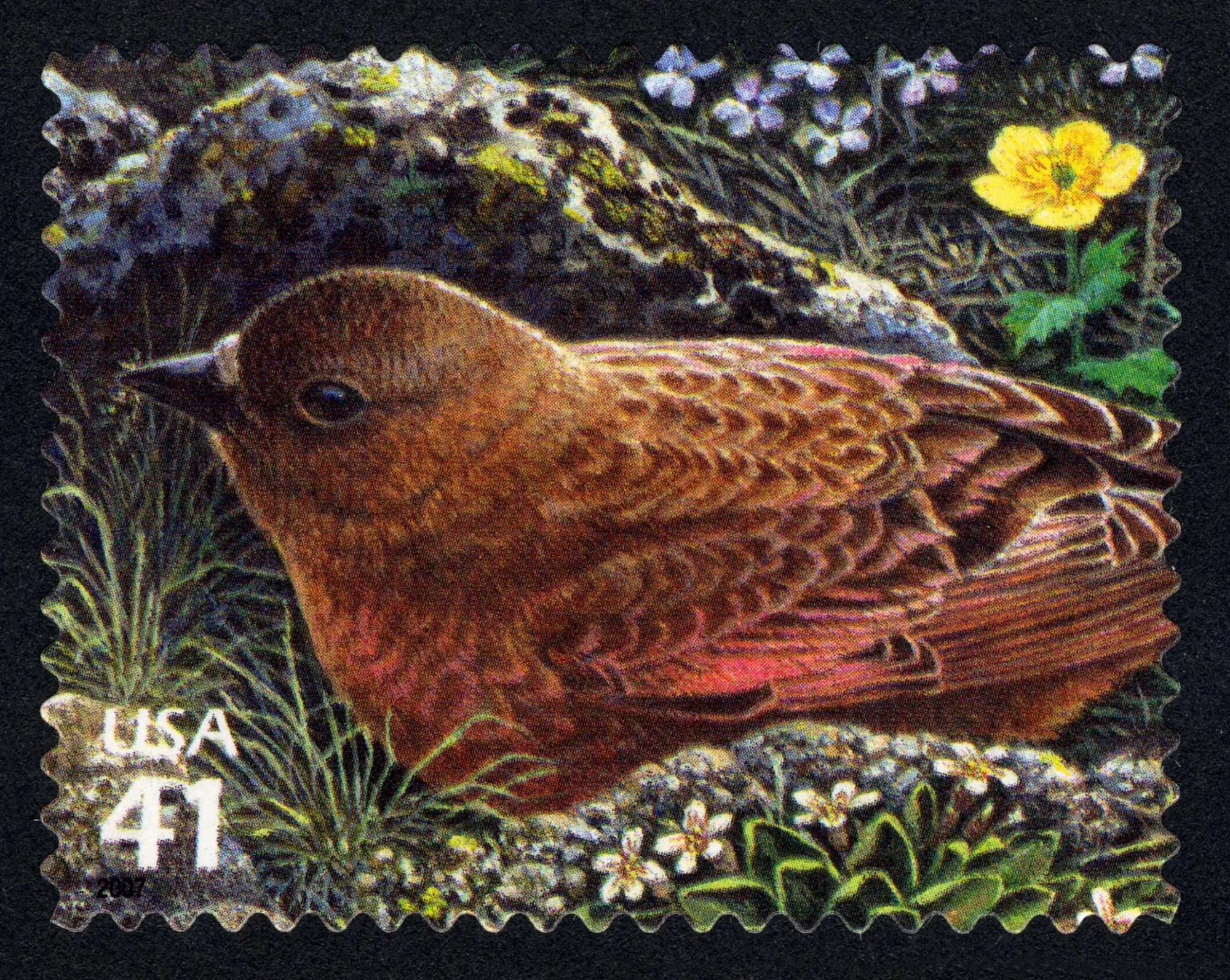
Alpine tundra begins above the tree line (upper limit of tree growth) in high mountain areas such as the Rockies. In this environment, snow covers much of the landscape until spring, and temperatures can be chilly even in summer.
To survive here, plants grow close to the ground and have extensive root systems that absorb water, collect nutrients, and anchor them against the wind. Only the hardiest animals live year-round on the tundra. In summer and fall they build up body fat and, in some cases, store food in dens or burrows. As the weather grows colder, thick fur or feathers help keep them warm. Some hibernate through winter.
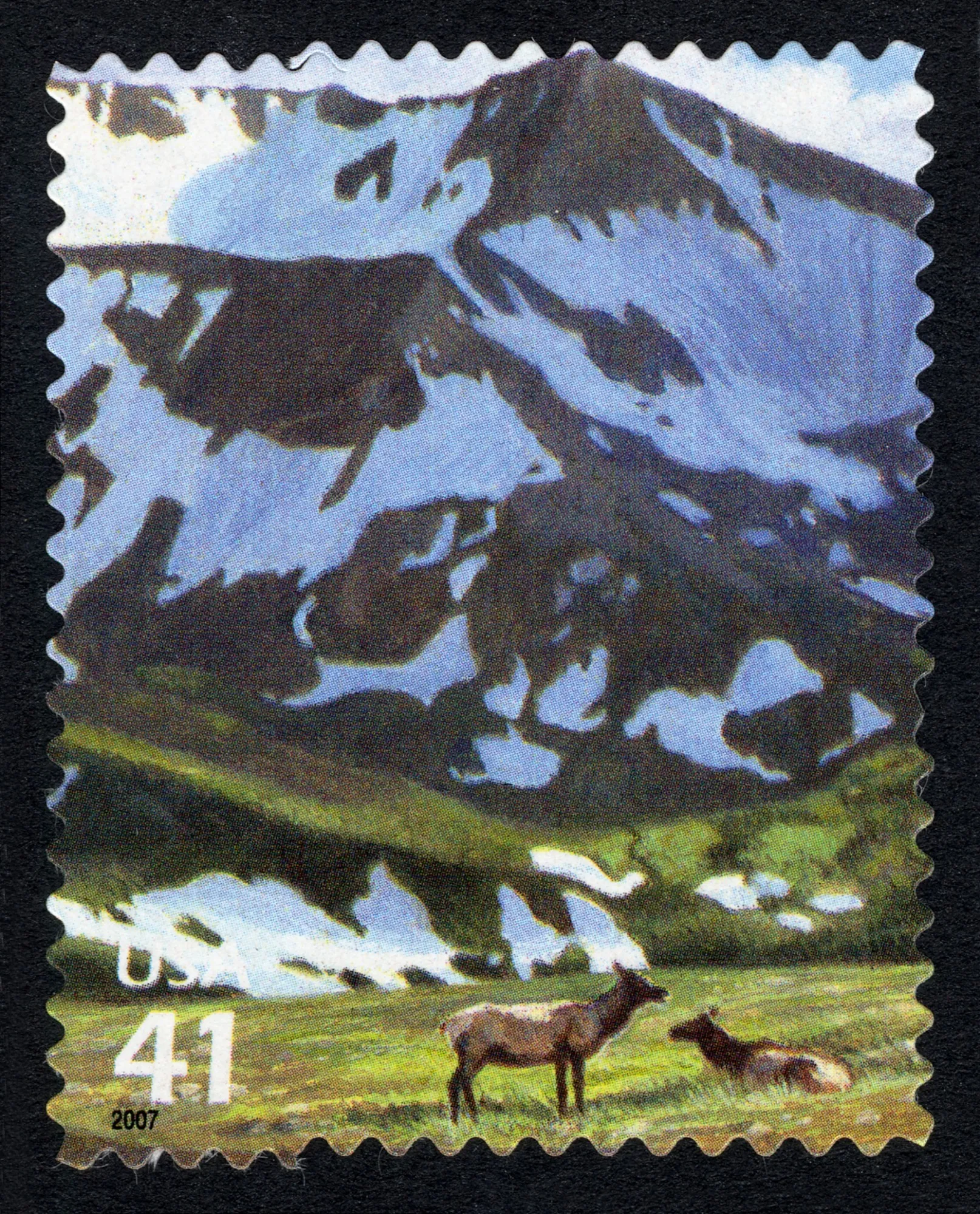
The stamp pane depicts a summer scene in Rocky Mountain National Park, Colorado, where snow lingers on the highest slopes and in a few sheltered basins. Elk and bighorn sheep graze the open areas while small mammals find safety amid the rocks. Birds
Horned Lark
Eremophila alpestris
Map Lichen
Rhizocarpon geographicum
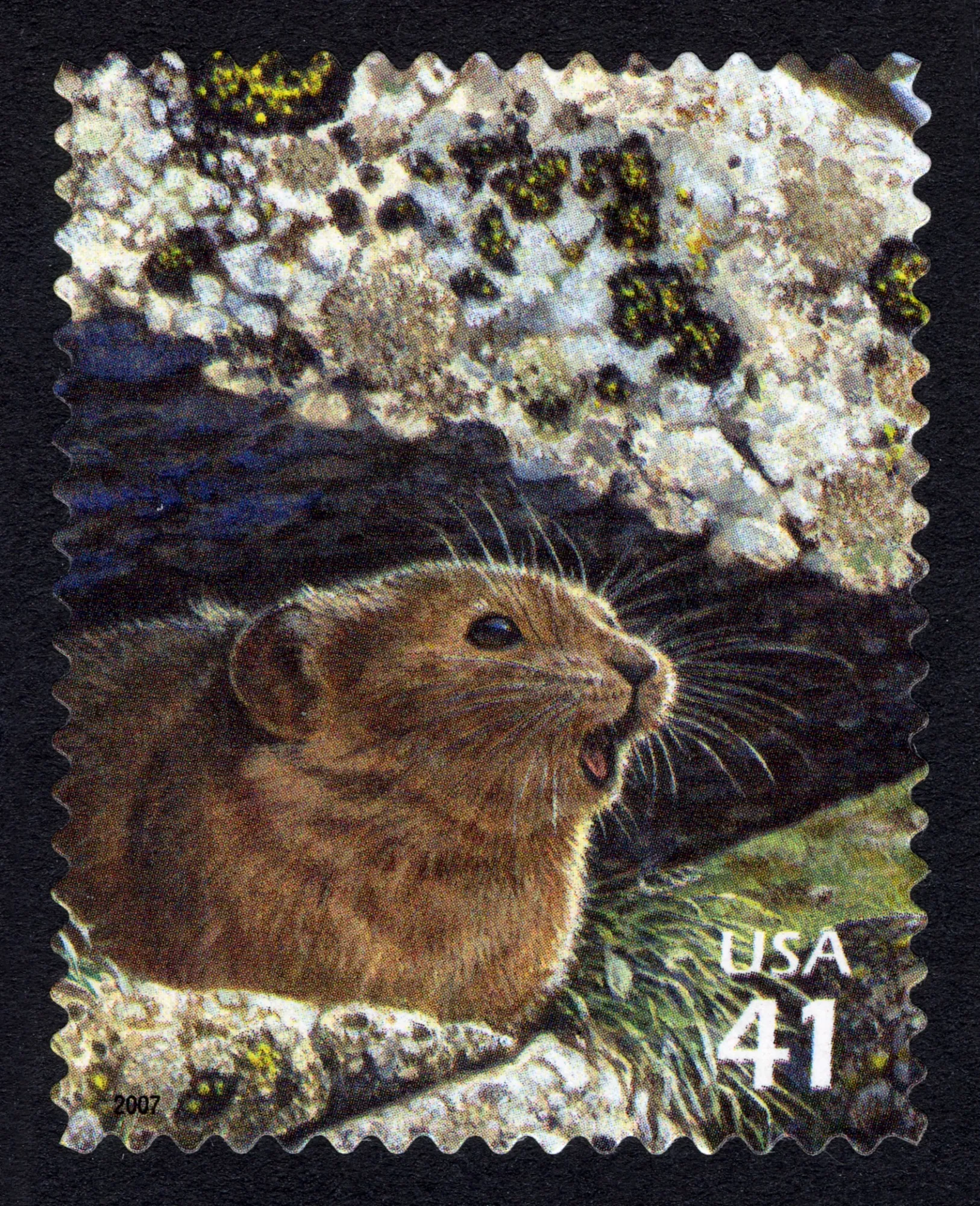
American Pika
Ochotona princeps
Horned Lark
Eremophila alpestris
Map Lichen
Rhizocarpon geographicum
American Pika
Ochotona princeps
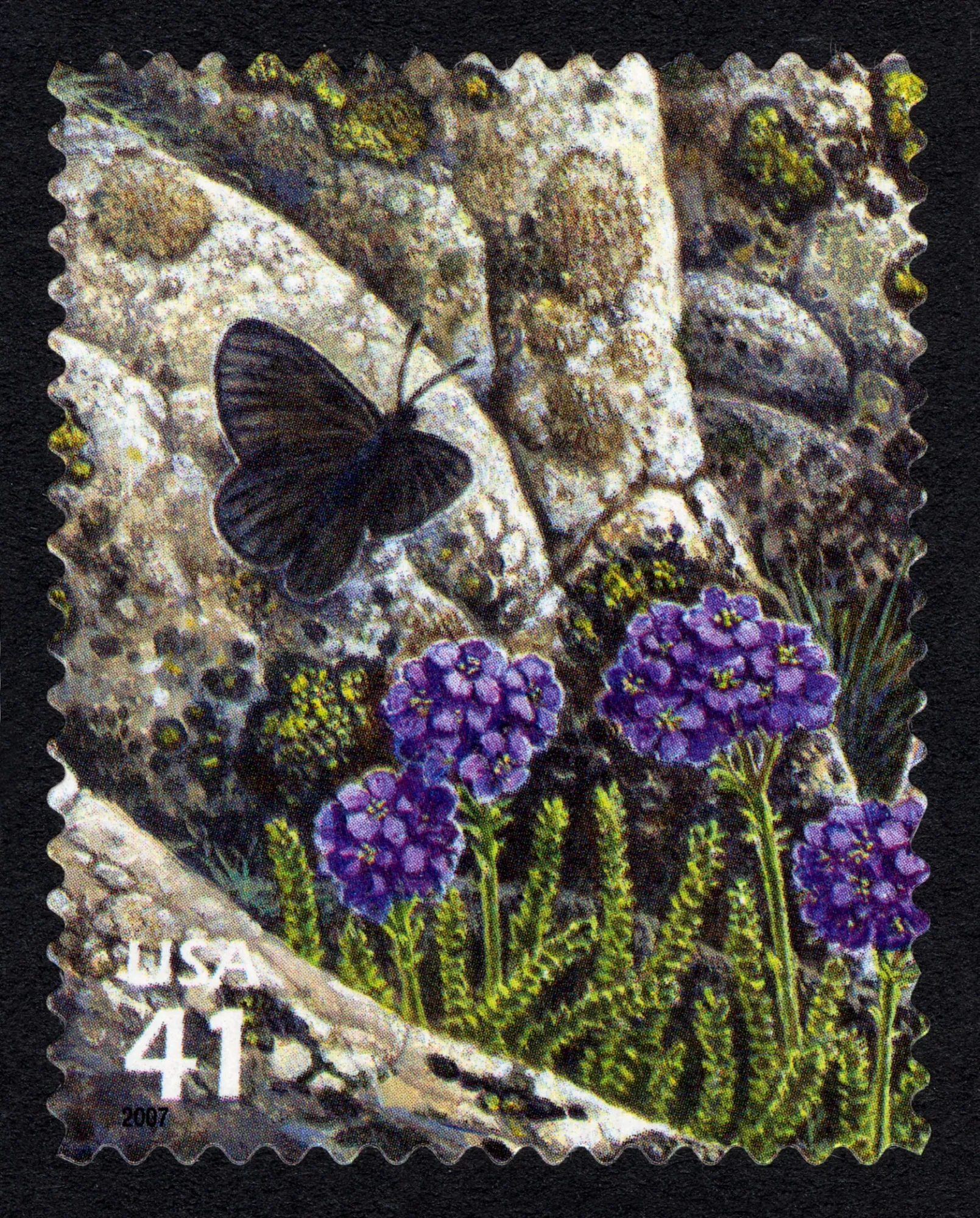
Magdalena Alpine Butterfly
Erebia magdalena
Sky Pilot
Polemonium viscosum
American Pipit eggs
Anthus rubescens
Alpine Forget-me-not
Eritrichum aretioides
Dwarf Clover
Trifolium nanum
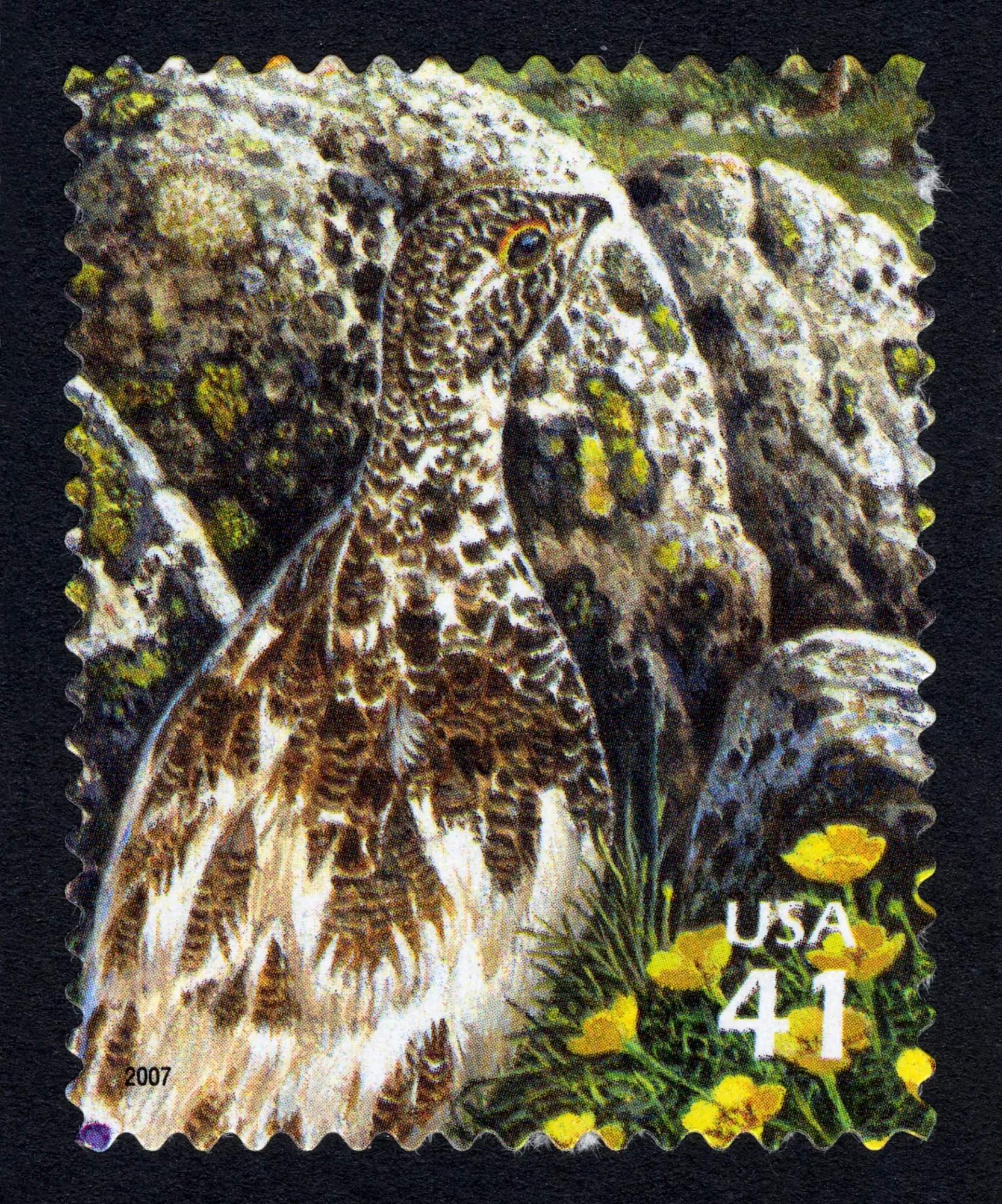
White-tailed Ptarmigan
Lagopus leucura
Elk (or Wapiti)
Cervus elaphus
American Pipit
Anthus rubescens
Alpine Avens
Acomastylis rossii turbinata
Melissa Arctic Butterfly
Oeneis melissa
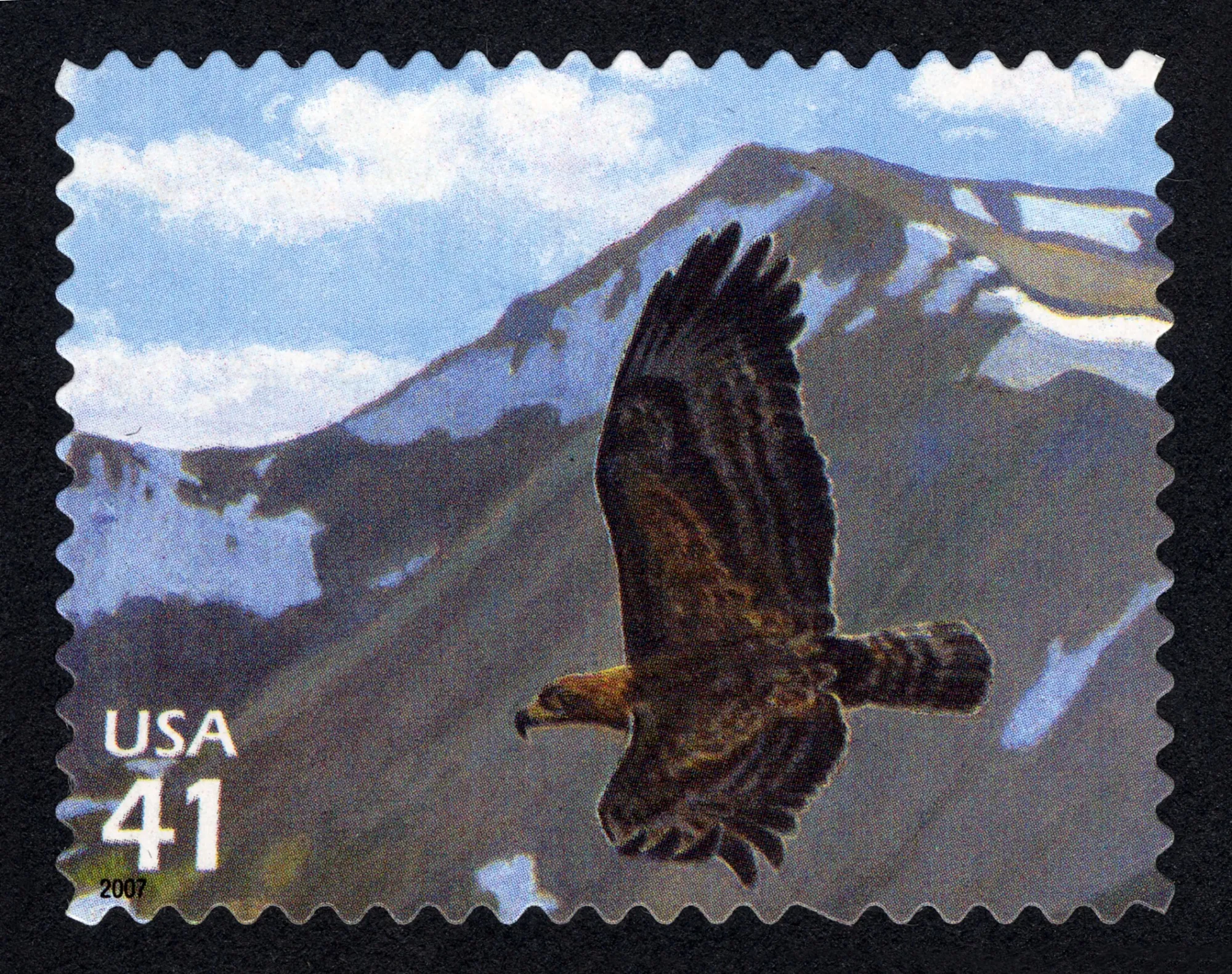
Golden Eagle
Aquila chrysaetos
Bighorn Sheep
Ovis canadensis
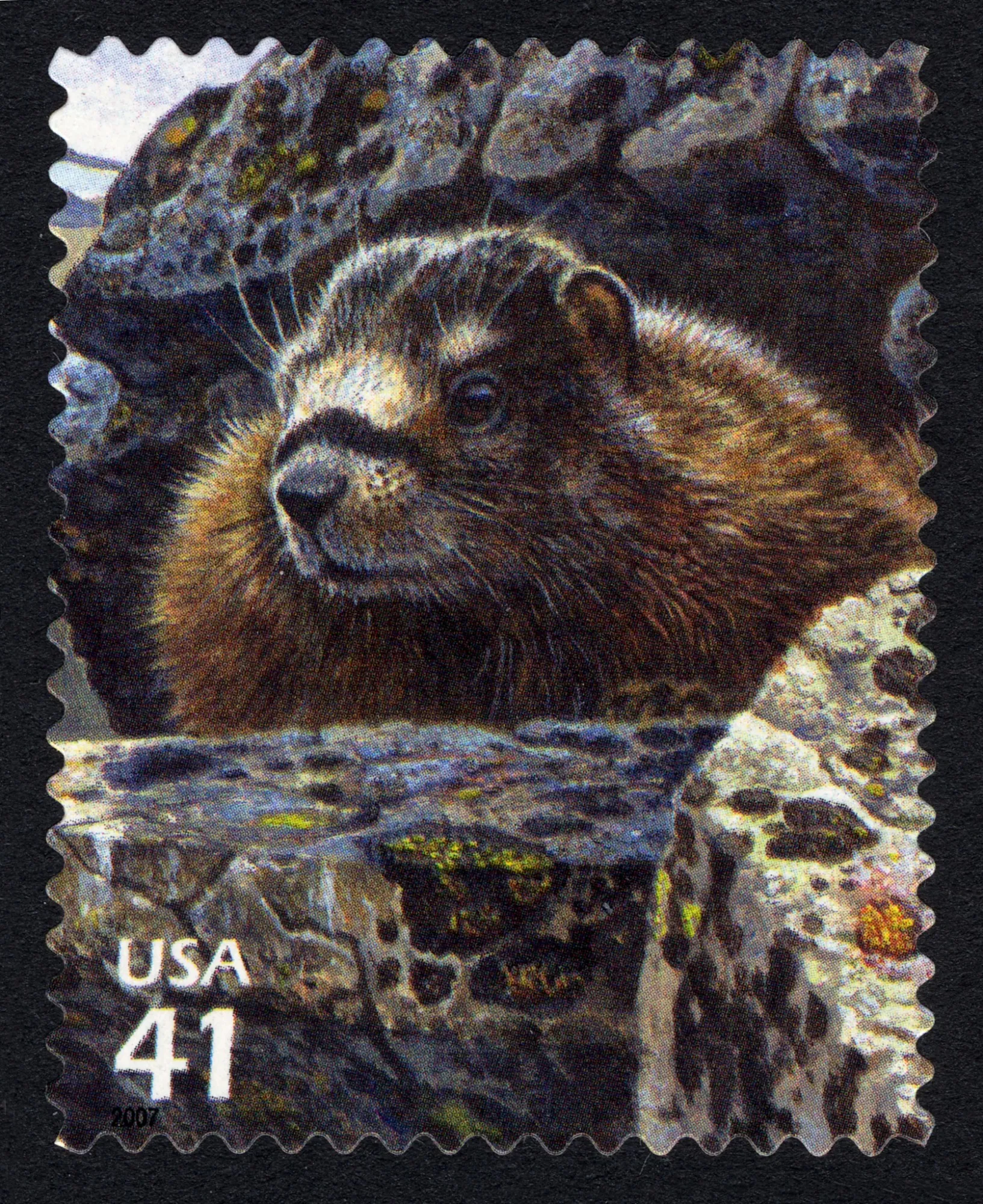
Yellow-bellied Marmot
Marmota flaviventris
Ermine (Short-tailed Weasel)
Mustela erminea
Alpine Phlox
Phlox pulvinata
Buttercup
Ranunculus sp.
Brown-capped Rosy-Finch
Leucosticte australis
Alpine Spring Beauty
Claytonia megarhiza
Moss Campion
Silene acaulis
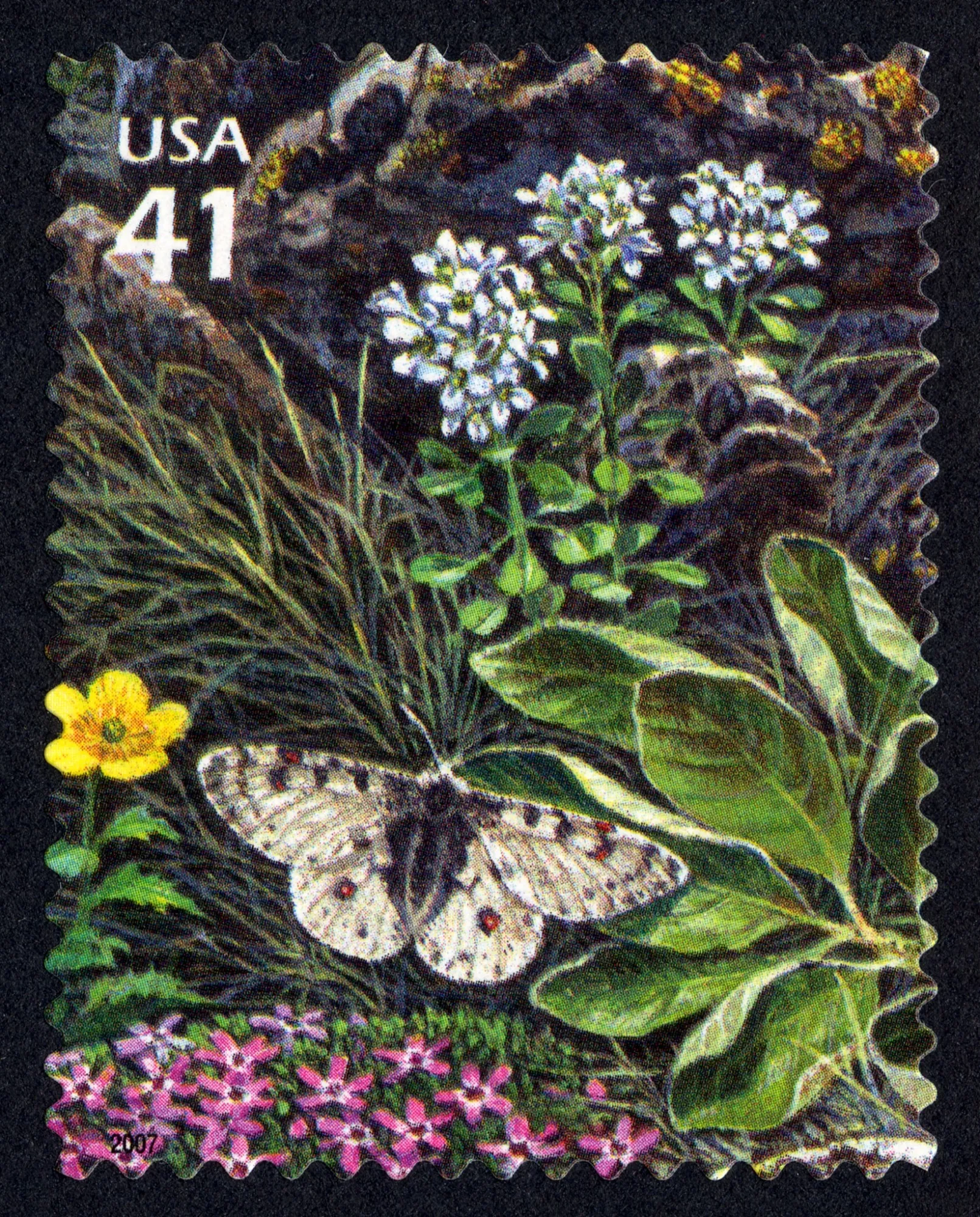
Rocky Mountain Parnassian Butterfly
Parnassius smintheus
Mountain Candytuft
Noccaea montana