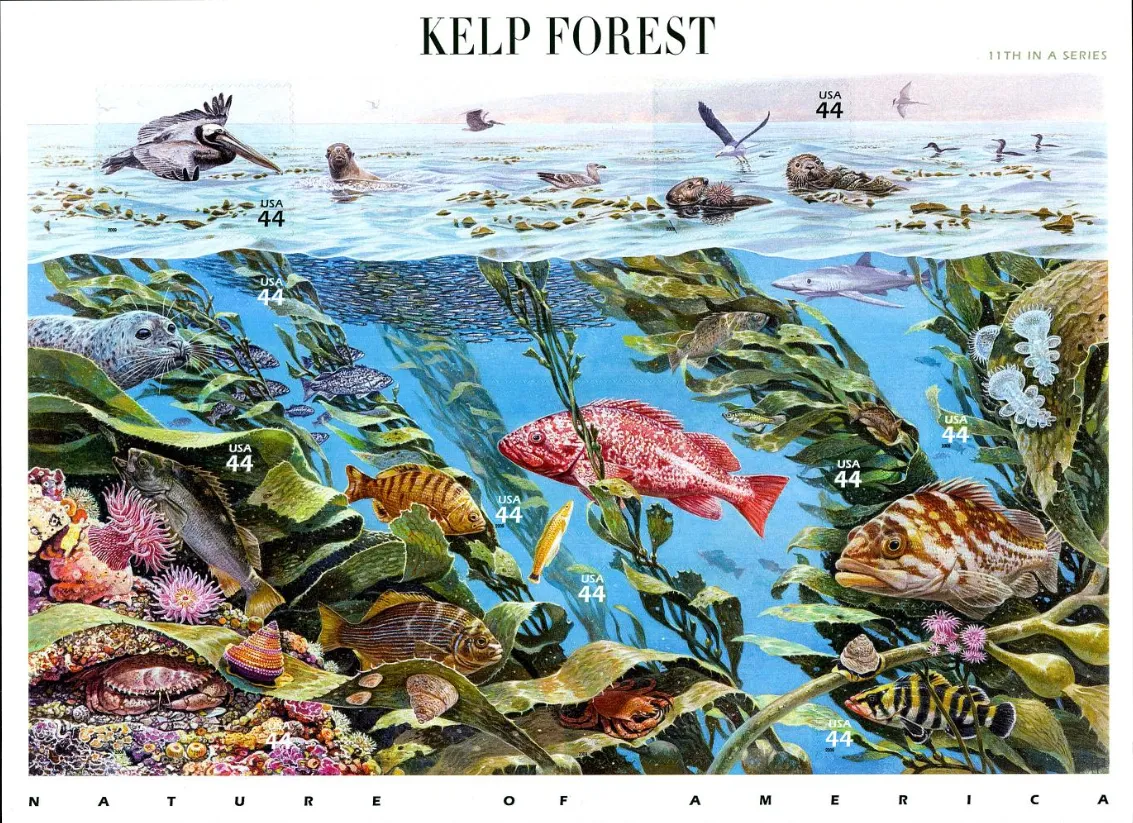
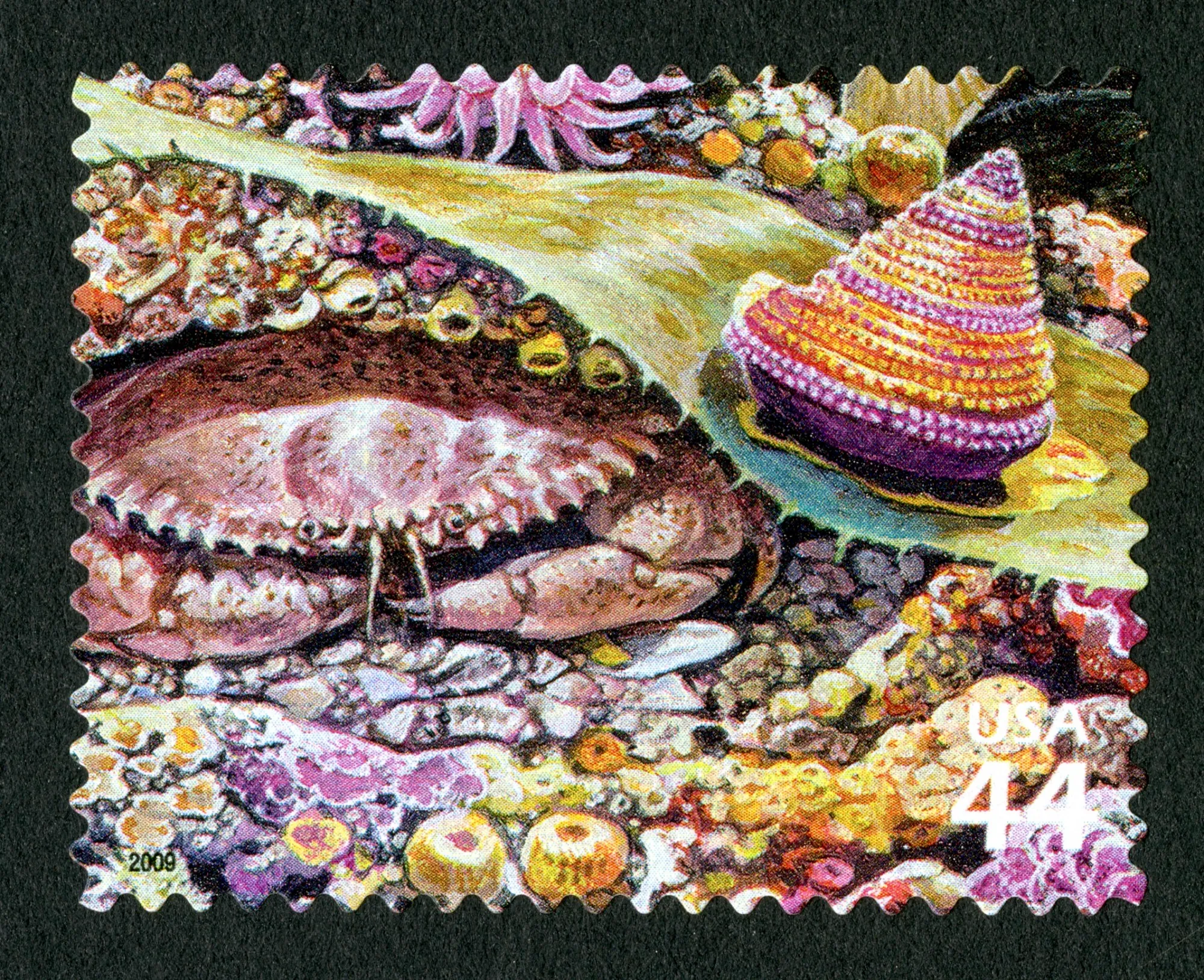
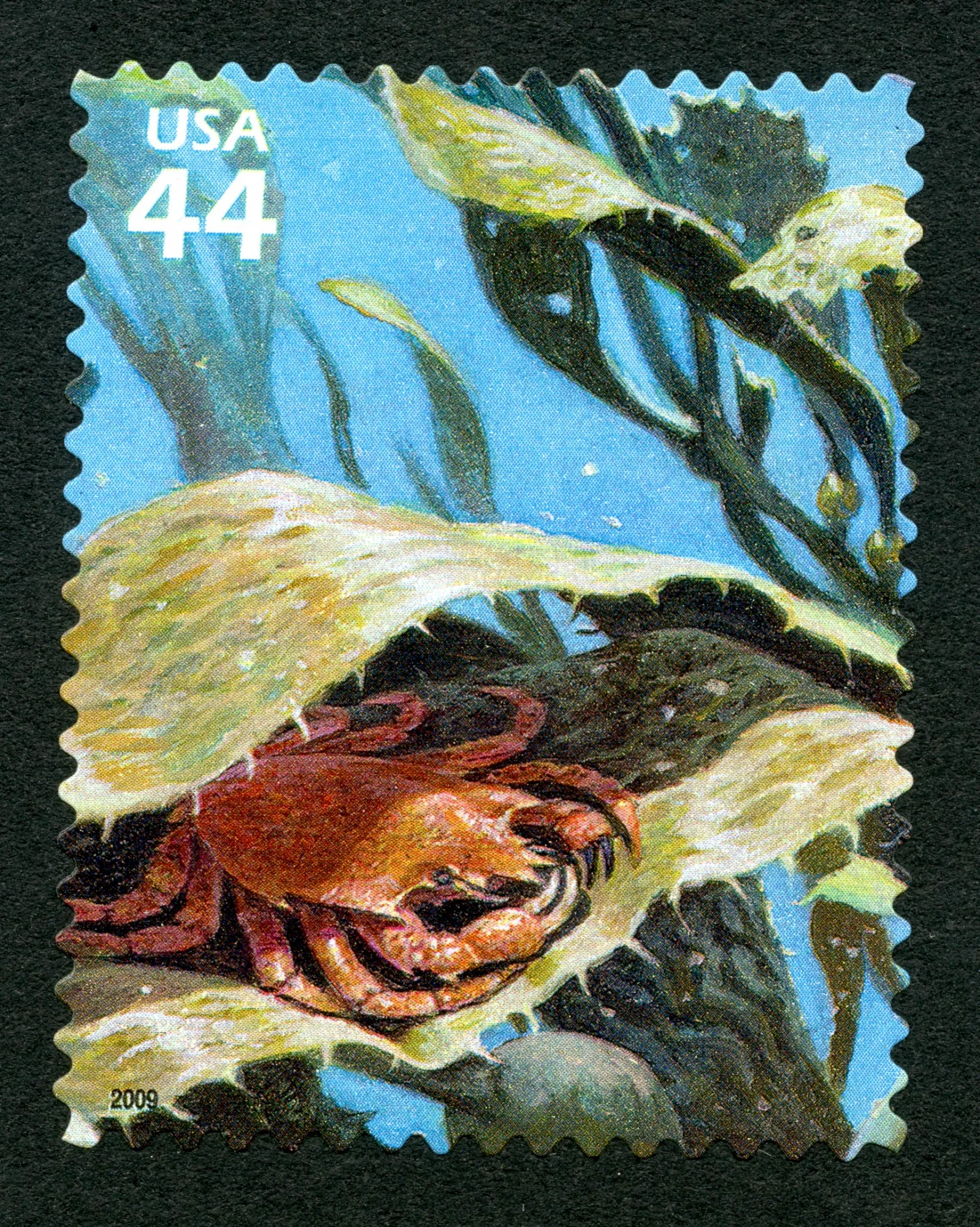
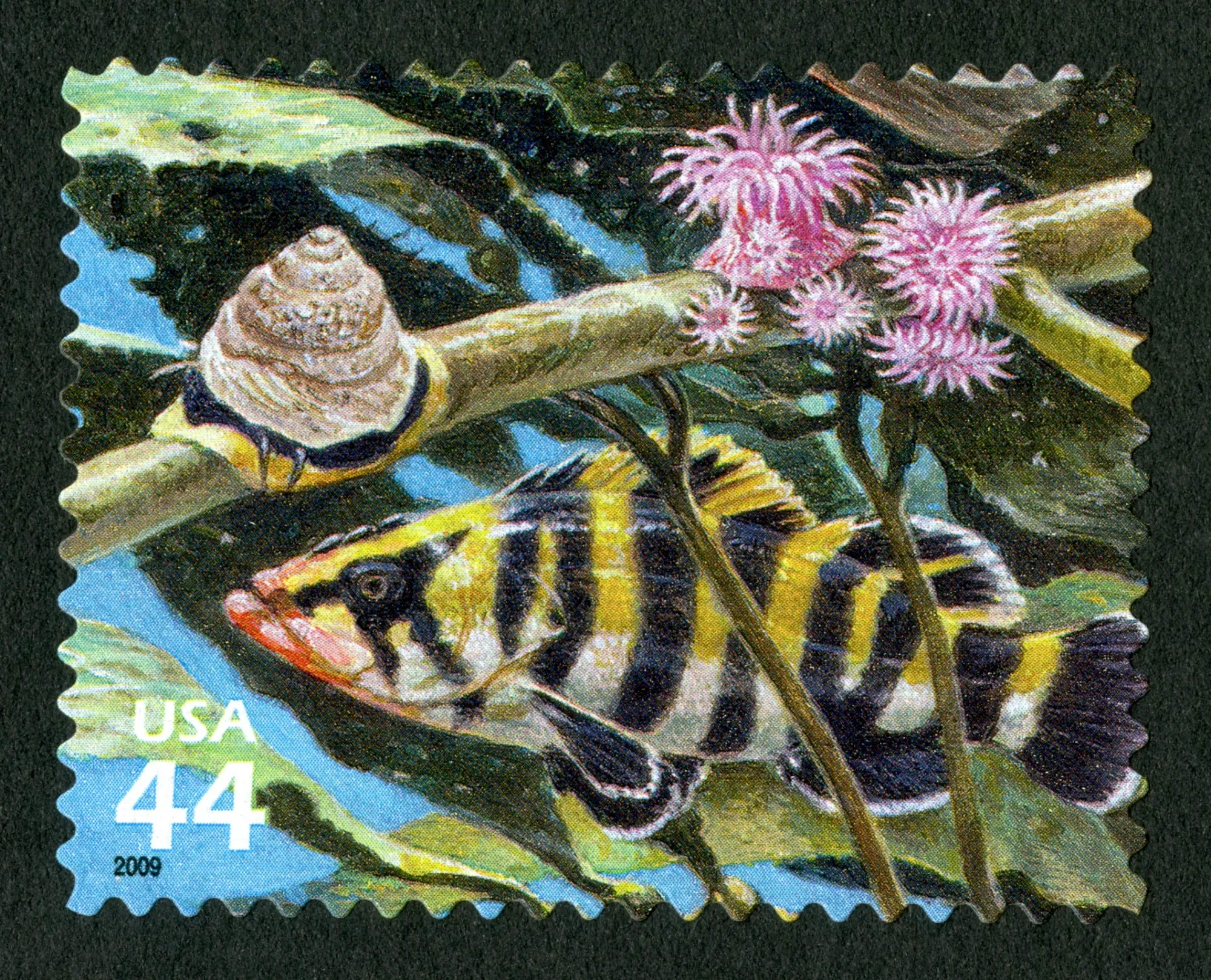
Hundreds of species live in the kelp forest, a lush undersea ecosystem in which the largest seaweeds, known as kelp, grow as tall as trees. Much like a forest on land, a kelp forest has an upper layer called a canopy, but instead of leafy branches, this canopy contains the topmost fronds of swaying towers of kelp. The largest kelp species extends a hundred feet or more from the canopy down to the seafloor, where its root-like holdfast clings to the rocky bottom and holds it in place.
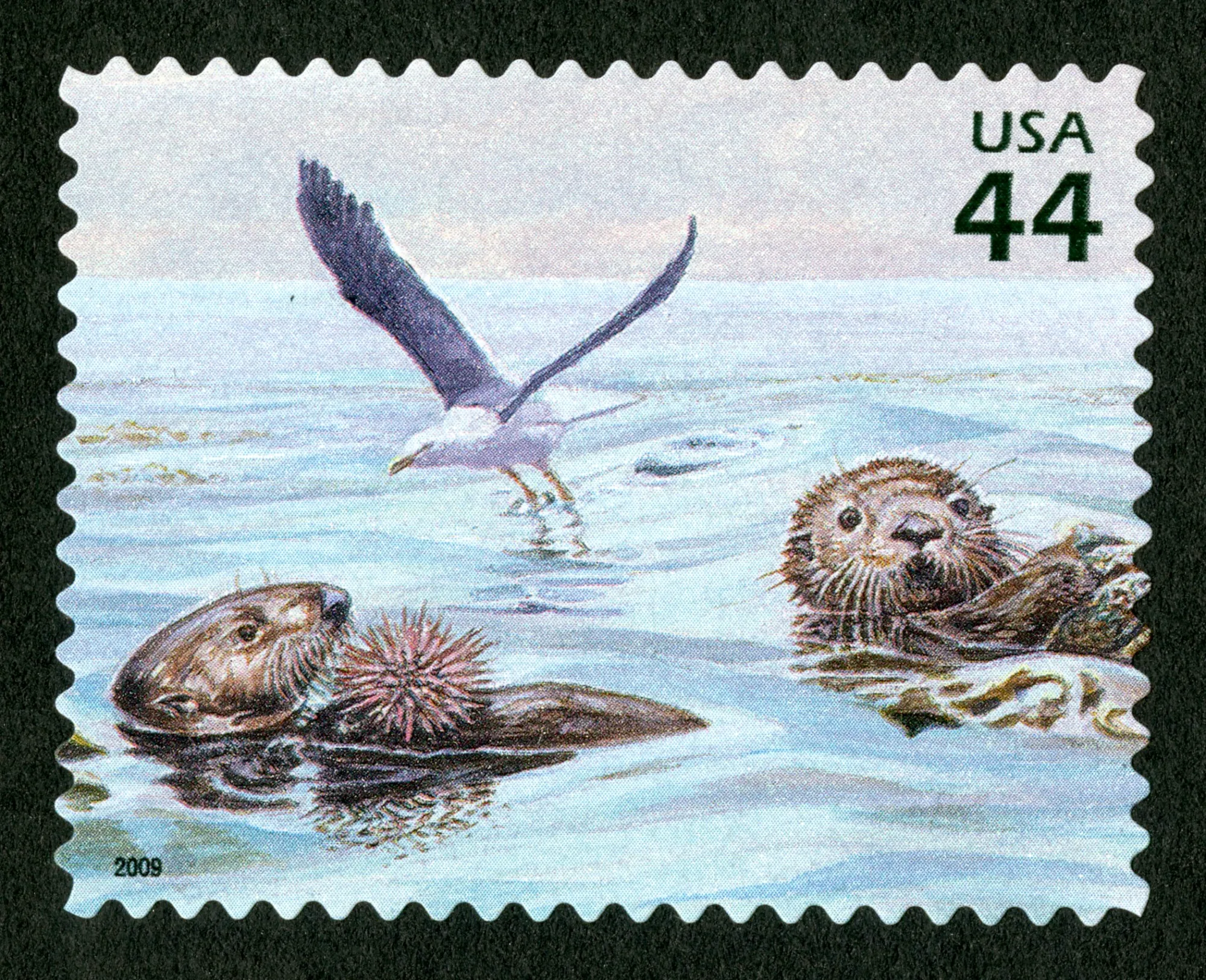
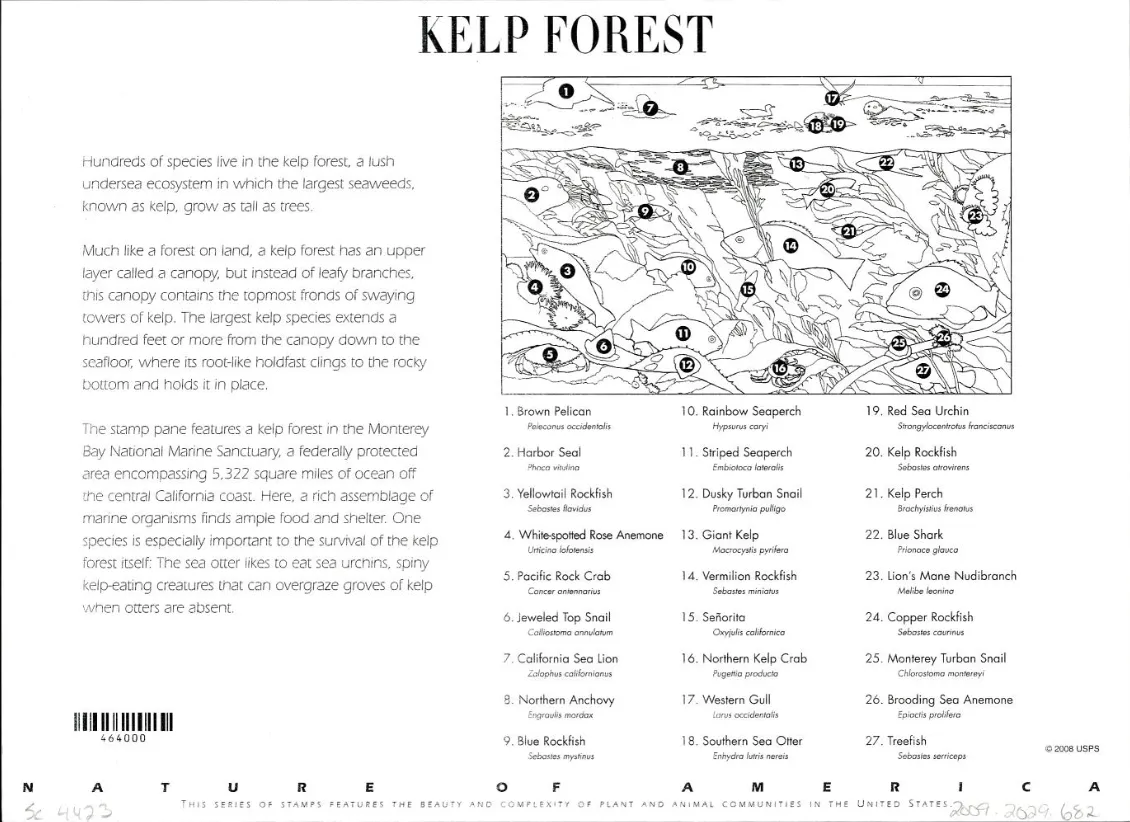
The stamp pane features a kelp forest in the Monterey Bay National Marine Sanctuary, a federally protected area encompassing 5,322 square miles of ocean off the central California coast. Here, a rich assemblage of marine organisms finds ample food and shelter. One species is especially important to the survival of the kelp forest itself: The sea otter likes to eat sea urchins, spiny kelp-eating creatures that can overgraze groves of kelp when otters are absent.
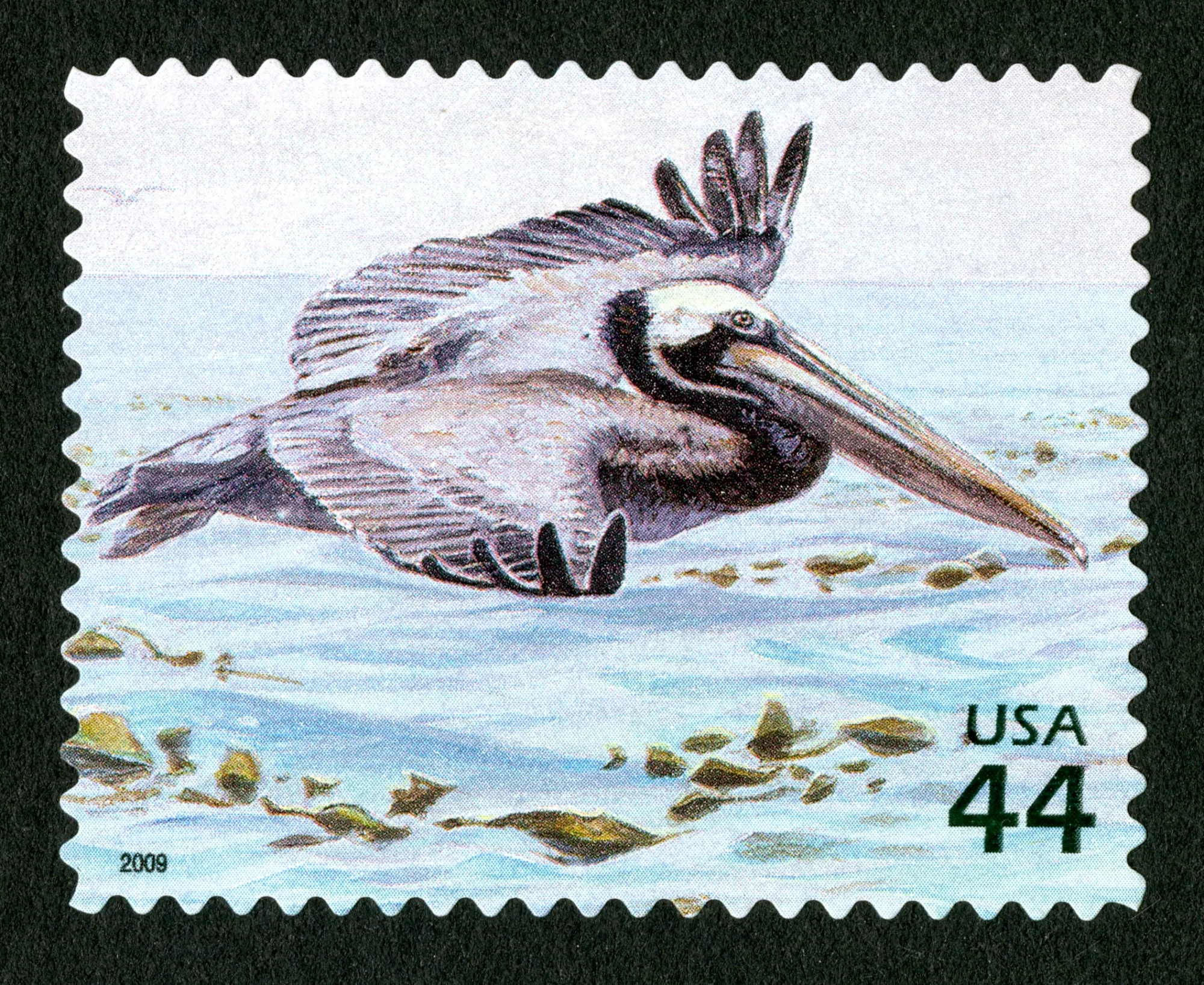
Brown Pelican
Pelecanus occidentalis
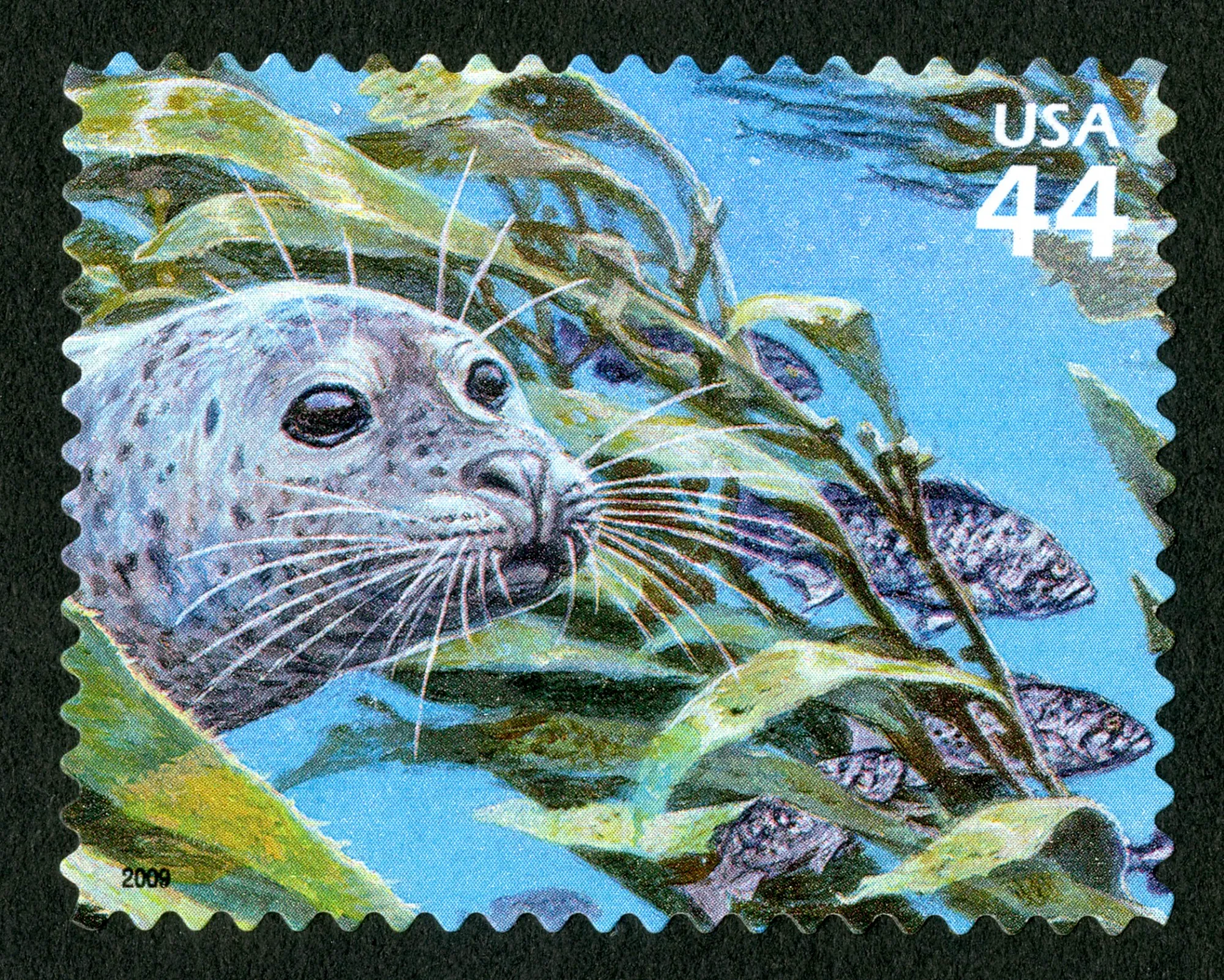
Harbor Seal
Phoca vitulina
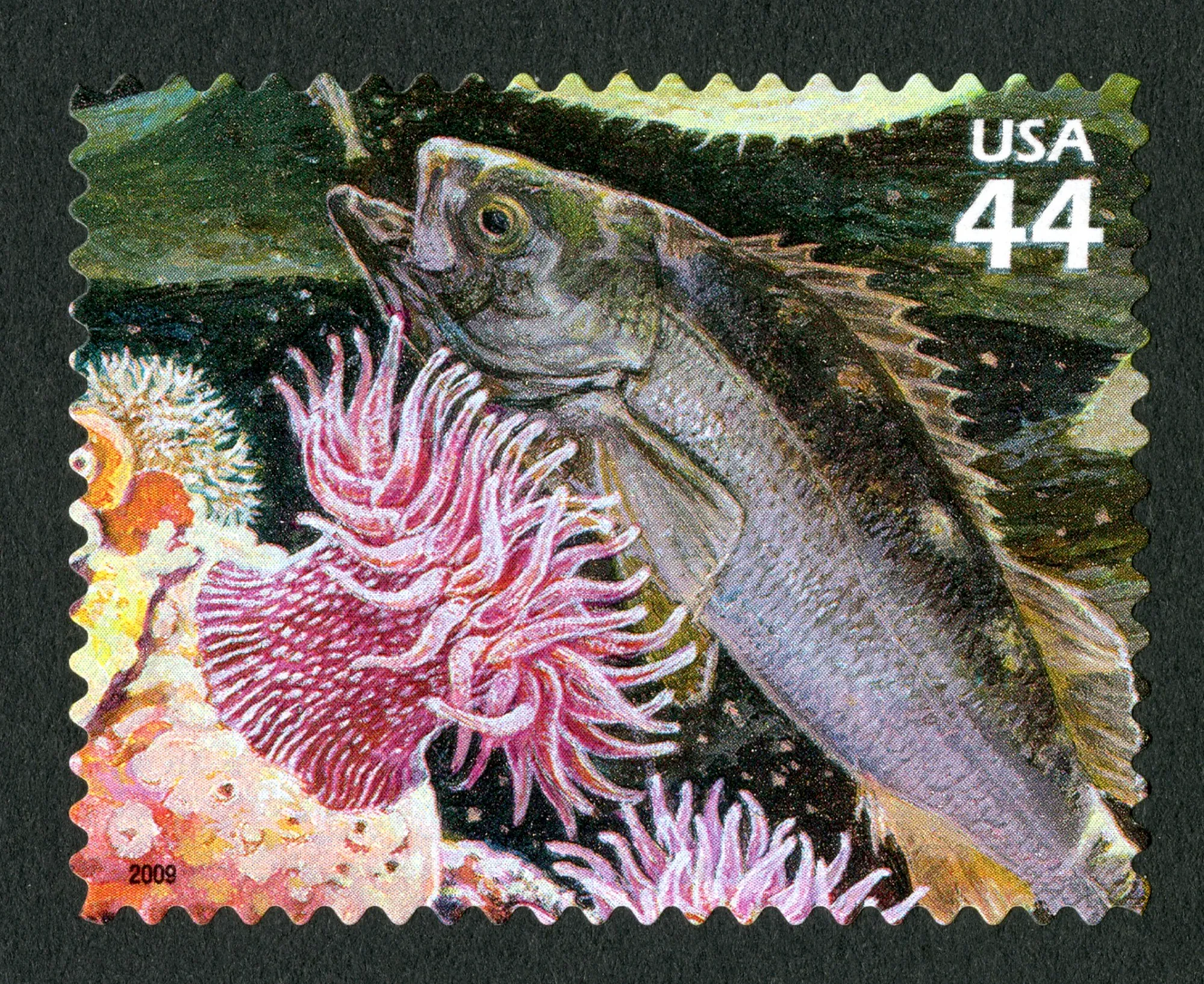
Yellowtail Rockfish
Sebastes flavidus
White-spotted Rose Anemone
Urticina lofotensis
Pacific Rock Crab
Cancer antennarius
Jeweled Top Snail
Calliostoma annulatum
California Sea Lion
Zalophus californianus
Northern Anchovy
Engraulis mordax
Blue Rockfish
Sebastes mystinus
Rainbow Seaperch
Hypsurus caryi
Striped Seaperch
Embiotoca lateralis
Dusky Turban Snail
Promartynia pulligo
Giant Kelp
Macrocystis pyrifera
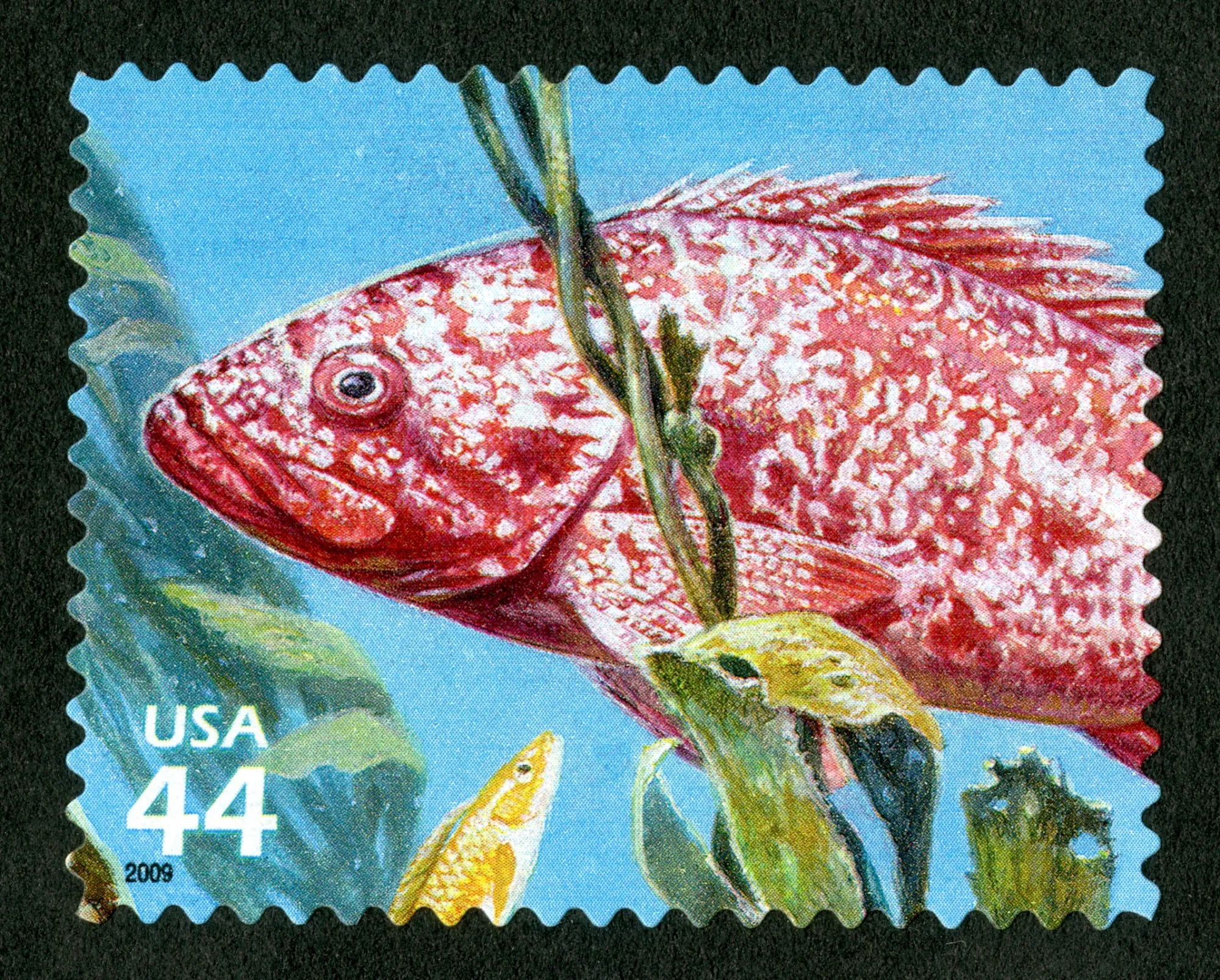
Vermilion Rockfish
Sebastes miniatus
Señorita
Oxyjulis californica
Northern Kelp Crab
Pugettia producta
Western Gull
Larus occidentalis
Southern Sea Otter
Enhydra lutris nereis
Red Sea Urchin
Strongylocentrotus franciscanus
Kelp Rockfish
Sebastes atrovirens
Kelp Perch
Brachyistius frenatus
Blue Shark
Prionace glauca
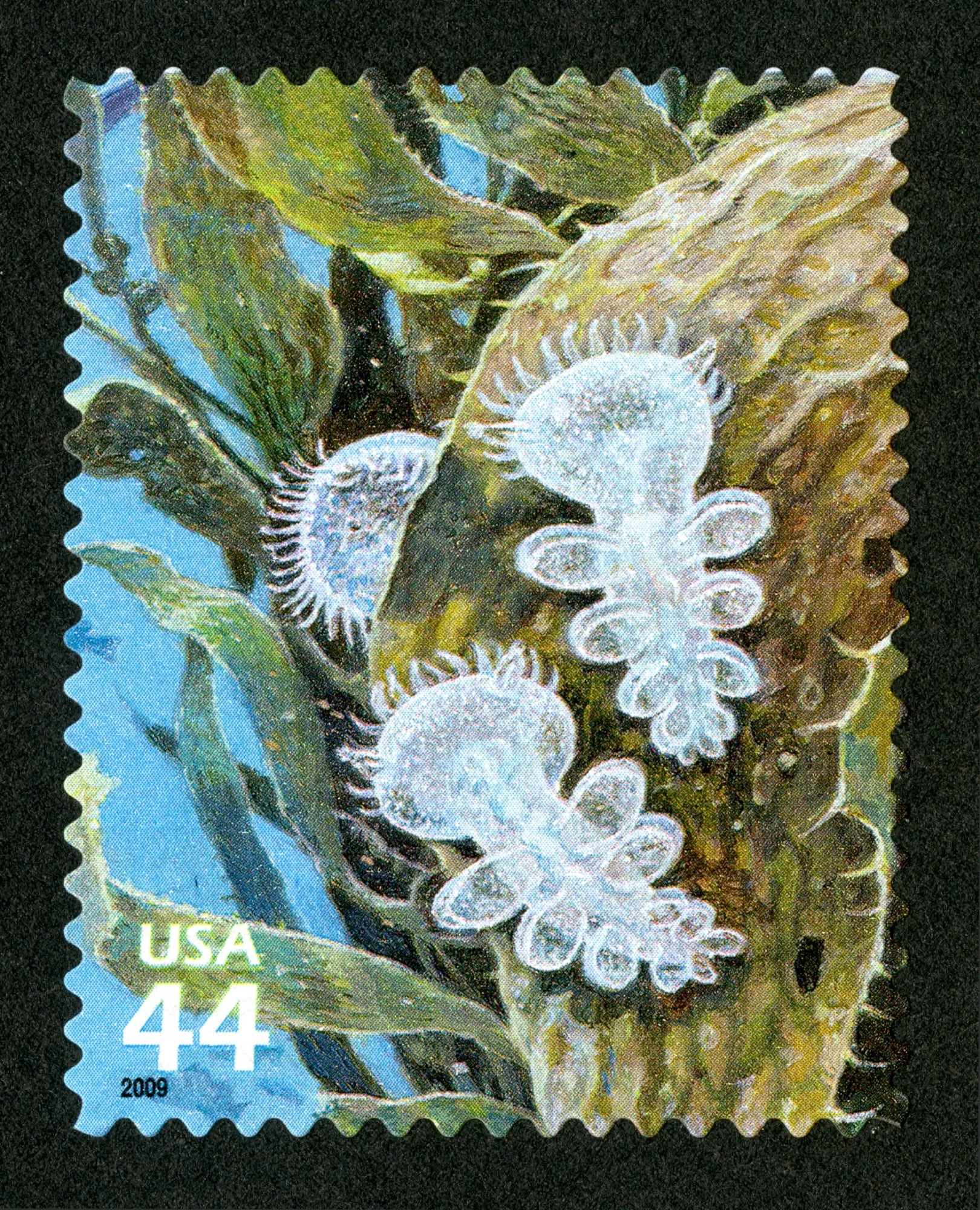
Lion's Mane Nudibranch
Melibe leonina
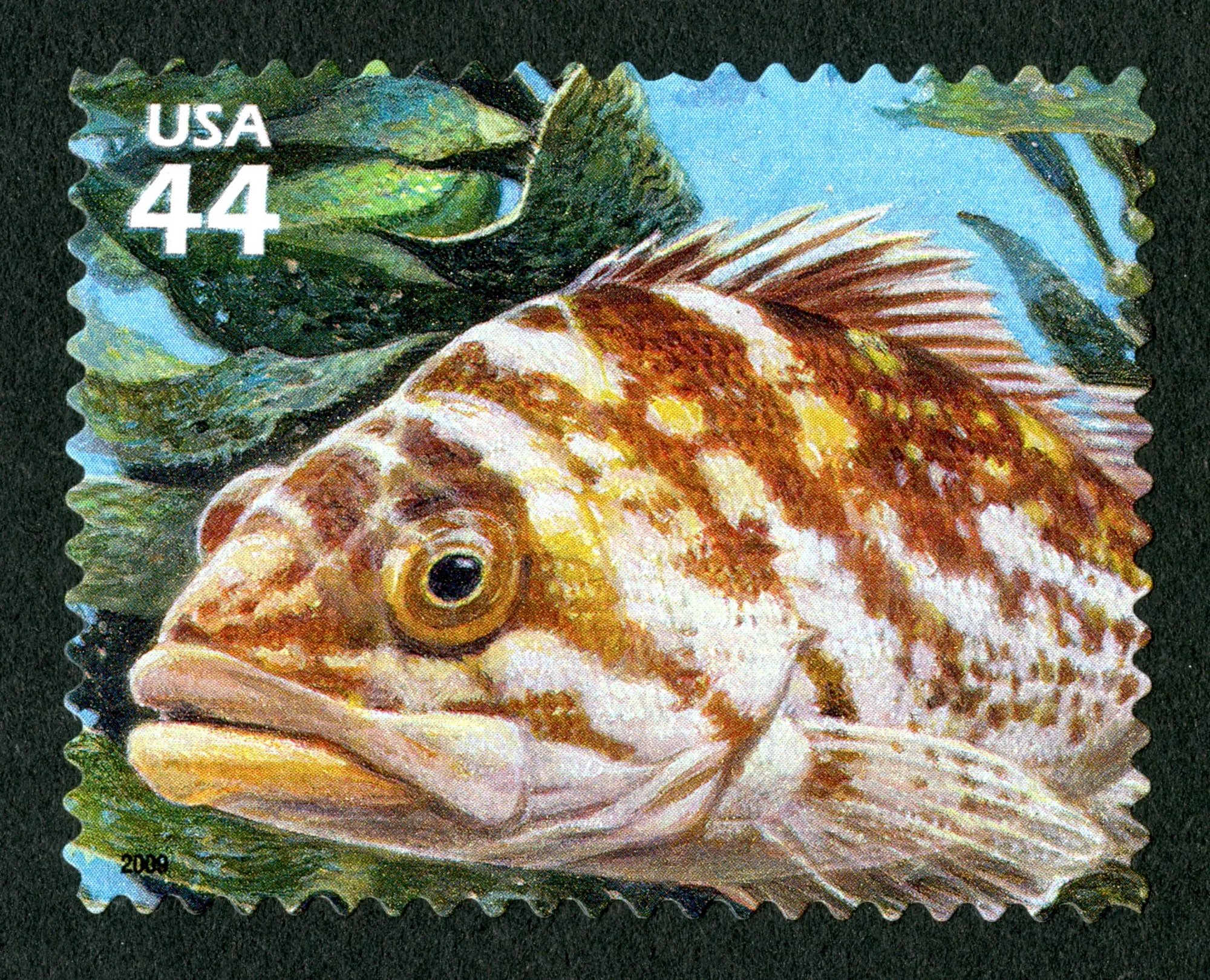
Copper Rockfish
Sebastes caurinus
Monterey Turban Snail
Chlorostoma montereyi
Brooding Sea Anemone
Epiactis prolifera
Treefish
Sebastes serriceps